
Pickleball Elbow: How Chiropractic Care Helps San Antonio Players Stay on the Court
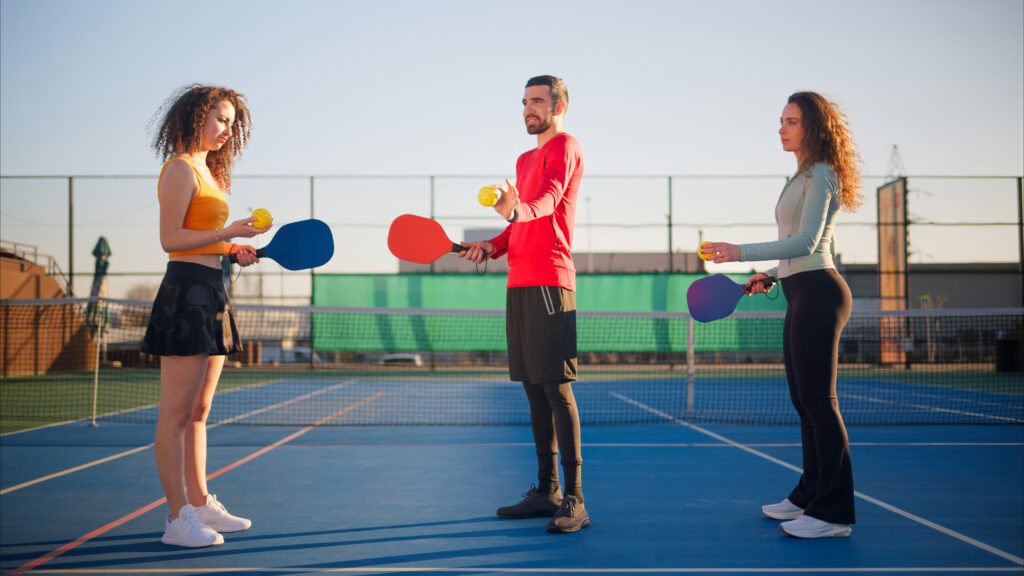
Pickleball went from a backyard novelty to one of the most played sports in the country in about five years. Participation climbed from roughly 4.2 million Americans in 2020 to 24.3 million in 2025, and San Antonio courts have filled up right along with the rest of the country. Anyone who plays regularly at a city rec center court or a neighborhood club around town knows the games are easy to find and hard to stop playing.
That is exactly why so many players end up rubbing the outside of their elbow between games.
Pickleball elbow is one of the most common overuse complaints paddle sport athletes bring into our offices. It is frustrating because it rarely arrives after one bad swing. It creeps in over weeks, then makes something as small as lifting a coffee cup feel sharp. The good news is that it responds well to conservative care when you address the whole arm and not just the sore spot.
What Is Pickleball Elbow?
Pickleball elbow is the everyday name for lateral epicondylitis, an irritation of the tendons that attach your forearm extensor muscles to the bony bump on the outside of your elbow. Those muscles are responsible for cocking your wrist back and stabilizing your grip. Every dink, drive, and block asks them to fire.
Clinicians often prefer the term lateral epicondylalgia or extensor tendinopathy, because research has shown the tissue is usually degenerating and disorganized rather than actively inflamed. That distinction matters for treatment. If the problem were simple inflammation, rest and ice would fix it. Because it is a tendon that has lost its capacity to handle load, the fix involves restoring that capacity.
Elbow injuries are not the most common pickleball complaint overall. In a five year review of 164 pickleball injuries treated at one academic medical center, knees, ankles, wrists, and shoulders all showed up more often. But when the elbow was the problem, three out of four cases were lateral epicondylitis. When pickleball hurts your elbow, this is almost always what it is.
Pickleball Elbow vs. Tennis Elbow
They are the same condition with different origin stories. Tennis players usually develop it from repetitive one handed backhands with a long racquet and a big follow through. Pickleball players develop it from something different.
A pickleball paddle is short and solid with no strings to absorb vibration. The ball is hard plastic. The kitchen line demands quick, choppy wrist action instead of full body swings. Add in the fact that most points are played inside a small space with very little follow through, and your forearm ends up absorbing shock that a tennis player’s shoulder and torso would have shared.
Why Your Elbow Hurts After Pickleball
A few habits show up again and again in players who develop symptoms:
Gripping too tight. Most players squeeze the handle far harder than necessary, especially during fast hands exchanges at the net. A death grip keeps the extensor tendons under constant tension.
Leading with the wrist. Flicking the paddle to generate pace, rather than rotating through the shoulder and trunk, loads the elbow directly.
Paddle weight and grip size. A paddle that is too heavy, or a grip that is too small, forces the forearm to work harder on every contact.
Playing volume that jumped fast. Going from twice a week to five days a week in a month is the single most common history we hear. Tendons adapt slowly, and they punish sudden increases.
Mishits off the edge guard. Off center contact sends a sharp vibration straight up the forearm.
Symptoms Worth Paying Attention To
- Aching or burning on the outside of the elbow that builds during play
- Pain when you shake hands, turn a doorknob, or lift a gallon of milk
- Weak grip, or the feeling that you might drop what you are holding
- Tenderness when you press the bony bump on the outside of the elbow
- Stiffness in the forearm in the morning that loosens up after movement
If you have numbness or tingling into the fingers, night pain, or swelling, that points to something other than a straightforward tendinopathy and should be evaluated promptly.
The Part Most Players Miss: It Often Starts Above the Elbow
Here is where a chiropractic approach differs from simply resting the arm.
Your elbow does not work alone. The nerves that supply your forearm extensors exit the spine in your neck. Your shoulder blade provides the stable base your arm swings from. Your mid back provides the rotation that keeps your arm from doing all the work. When the neck, thoracic spine, or shoulder blade is stiff or moving poorly, the elbow quietly picks up the slack.
Research supports looking upstream. Systematic reviews of manual therapy for lateral epicondylalgia have found that mobilization with movement applied at the elbow produced improvements in both pain and pain free grip strength over the short and long term, and that cervical spine mobilization produced immediate improvements in symptoms, though the long term data on the neck component is still limited. The practical takeaway is that treating the arm in isolation leaves results on the table.
This is also why so many players get temporary relief from a brace or a cortisone shot and then find the pain returns once they play a full afternoon again. The tissue got quiet. The mechanics that overloaded it did not change.
How Chiropractic Care Addresses Pickleball Elbow
At South Texas Spine and Knee, Dr. Josh Bonine and our team treat pickleball elbow as a chain problem, not a spot problem. Care typically includes several pieces working together.
A real exam first. We test grip strength, resisted wrist extension, elbow and wrist joint play, shoulder blade control, and neck range of motion. We also want to know your playing schedule, your paddle, your grip size, and which shot hurts most. That history usually tells us more than any single orthopedic test.
Joint work at the elbow and wrist. Gentle mobilization of the radiohumeral joint and the wrist restores normal glide and reduces the tension the extensor tendons work against.
Spinal adjustments where indicated. If the neck or thoracic spine is restricted, addressing it can reduce pain sensitivity in the arm and improve how the shoulder and elbow share the workload.
Soft tissue therapy. Targeted work through the extensor bundle, the supinator, and the shoulder girdle helps break up the protective guarding that builds up around a cranky tendon.
Progressive loading. This is the part that makes results stick. Slow, controlled wrist extension work and grip training rebuild the tendon’s tolerance. It is not glamorous, and it is the difference between a six week fix and a recurring problem.
Technique and equipment coaching. Sometimes the most valuable thing we do is tell a player to loosen their grip, size up their handle, and add two rest days for a month.
Because we also see plenty of knee, shoulder, and low back complaints from the same sport, we look at how you move overall. A player compensating for a sore knee often changes how they load the arm without realizing it.
Staying Ahead of It
Warm up the forearm before you play with light wrist circles and a few sets of easy wrist extensions. Keep a loose grip until the moment of contact. Rotate through your torso instead of flicking at the wrist. Build your playing volume gradually, and take at least one full rest day between hard sessions. Check that your paddle weight and grip size actually fit your hand rather than whatever was on sale.
And if the ache has been hanging around for more than two weeks, get it looked at before it becomes a six month problem.
Ready to Get Back to Full Swings?
You do not have to trade pickleball for a brace and a bottle of ibuprofen. Our San Antonio team treats paddle sport injuries every week, and most players start feeling real change within the first few visits.
Call 210-233-8800 or book your evaluation online. We have locations across Northwest San Antonio, the Southside, Selma and Schertz, and Kerrville and the Hill Country, with same week appointments available. Tell us which shot hurts, and we will build you a plan to fix it.
Frequently Asked Questions
How long does it take to recover from pickleball elbow? Mild cases that are caught early often settle within four to six weeks with the right loading program and activity adjustments. Cases that have been going on for several months can take three to six months, because the tendon has to rebuild its capacity rather than simply calm down. Starting care sooner shortens the timeline considerably.
Can I keep playing pickleball with elbow pain? Often yes, with modifications. Complete rest is rarely the best answer for a tendinopathy. Most players do better reducing session length and frequency, avoiding hard drives and overheads temporarily, and loosening their grip, rather than stopping entirely. Your care plan should tell you specifically what to keep and what to pause.
Does a chiropractor treat elbows, or only backs? Chiropractors are trained to evaluate and treat the joints and soft tissues of the entire body, including the elbow, wrist, and shoulder. Extremity care is a routine part of practice, particularly for sports injuries.
Will an elbow brace fix pickleball elbow? A counterforce strap can reduce pain during play by changing where load transmits through the tendon, which makes it a useful short term tool. It does not address grip strength, technique, or the neck and shoulder mechanics that contributed to the problem, so it works best alongside active care rather than instead of it.
Do I need an MRI for elbow pain from pickleball? Usually not. Lateral epicondylitis is generally diagnosed through history and physical examination. Imaging is considered when symptoms do not respond as expected, when there is a suspicion of a tear or nerve involvement, or when the presentation does not fit the typical pattern.
Is pickleball elbow the same as a torn tendon? No. Pickleball elbow involves degenerative change and micro damage within the tendon, not a full tear. A frank tendon rupture presents differently, usually with sudden onset, significant weakness, and often visible swelling or bruising, and needs prompt evaluation.

Main office Location
Location Address:
2211 NW Military Hwy #116, San Antonio, TX 78213
Southside / SouthPark Mall
Location Address:
94 Briggs, Suite 300, San Antonio TX 78224
Selma / Schertz
Location Address:
17170 Jordan Rd, Suite 405, Selma TX 78154
Kerrville / Hill Country
Location Address:
124 Blueridge West, Suite 206, Kerrville, TX 78028