
What Does My MRI Really Mean?
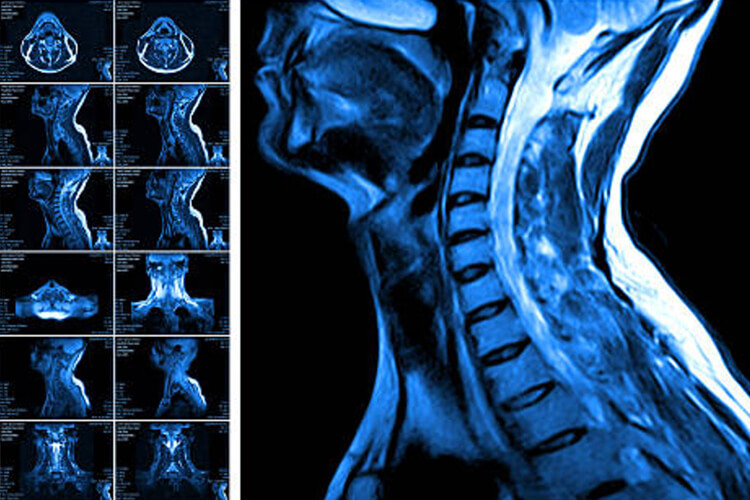
Patients ask every day: “What does my MRI mean?”
The truth is that many people look at an MRI report and immediately fear the worst — even when the findings don’t match how their body feels or what is actually possible with non-surgical care.
In this guide, Dr. Josh Bonine explains what MRIs really show, why the results can be confusing, and how your symptoms, history, and movement patterns tell a much clearer story than a single image ever could.
Why MRI Reports Can Be Confusing
MRI results often sound alarming — words like bulge, protrusion, degeneration, narrowing, or bone spur can make you feel like surgery is your only option. But as Dr. Josh explains to patients every day, MRI findings don’t always correlate with pain, and they certainly don’t predict your future.
He put it simply during our call:
“People upload their MRIs and ask what it all means. The reality is, it’s not always representative of how bad things were or how bad things are going to be.” Sometimes a severe-sounding MRI comes with mild symptoms. Other times, a normal or mild MRI comes with major pain.
That’s why he never bases treatment decisions on a report alone.
A Better Question: What Is Your Body Actually Doing?
Dr. Josh focuses on three things that matter far more than what’s printed on the MRI:
1. Your symptoms
- Is the pain sharp, dull, burning, or numb?
- Does it run down the leg? (Many people think it’s sciatica — “most of the time it’s
not.”) - Does it worsen with sitting, standing, sleeping, or bending?
2. Your movement
- What happens when you bend, walk, lift your leg, or rotate?
- How are the joints and nerves behaving under motion?
3. Your history
- How long you’ve had symptoms
- What treatments you’ve tried
- Any accidents, surgeries, or flare-ups along the way
MRI findings only make sense in the context of your actual life and your actual body — not just the radiologist’s written summary.
A Real Patient Example
During a discussion about long-term improvements, Dr. Josh shared a real case he still talks about today:
A pastor came in with a bone spur between C5 and C6.
It looked like a pebble sitting on the front of the disc.
He followed his treatment plan closely —
- consistent visits,
- consistent home care,
- consistent decompression and corrective work —and one year and one day later, the bone spur was completely gone.
Not reduced.
Not slightly smaller.
GONE.
As Dr. Josh put it: “His neck reversed aging by 20 years in one year.” And this wasn’t a magic one-in-a-million outcome.
He said:
“Those things can happen… and they happen regularly.” This is why he tells patients: an MRI is a snapshot in time — not a forecast of your
future.
Why Symptoms Often Matter More Than MRI Images
Here are common patterns he sees:
- A 7 mph fender-bender can cause major disc and nerve irritation while a 70 mph crash may cause little discomfort. (This depends on seat position, bracing, foot placement, seatbelt angle, and whether you saw it coming.)
- A mild disc bulge can cause severe leg pain if it hits the wrong spot on a nerve.
- A “severe” MRI can come with very manageable symptoms if the inflammation is low and the spine is decompressing properly.
This is why Dr. Josh looks at the whole picture — not the one scary line in the report.
What You Can Expect During Your Evaluation
When you bring in your MRI, Dr. Josh will:
- Explain the report in plain English without alarming language and without minimizing your concerns.
- Compare the image with your movement tests because pain patterns reveal more than pictures.
- Identify whether you are a good candidate for decompression, focused shockwave, Class IV laser, chiropractic care, or a combination.
- Map out a realistic timeline based on your condition, history, and goals.
(For accepted cases, he says 75–90% improvement is typical within 3–6 months, and many people feel a difference in the first month or even the first few sessions.) - Give you a plan that actually makes sense for your life, not a generic protocol.
What If You’ve “Tried Everything”?
Many MRI-weary patients come in saying:
- “I feel like I’ve tried everything.”
- “I don’t want surgery.”
- “I’m tired of temporary fixes.”
- “I just want to get my life back.”
This is exactly the group Dr. Josh specializes in.
From post-surgical patients with hardware, to people told they were “bone-on-bone,” to long-term sciatica-type cases, to patients who have been discouraged by what their MRI says — there is often far more hope than the report suggests.
The Takeaway: Your MRI Is Only One Piece of the Puzzle
An MRI can be useful — but it doesn’t define you, your future, or your potential to heal.
Your symptoms, movement, lifestyle, and history tell the real story.
And with modern non-surgical treatments like decompression and focused shockwave, the body can often do far more than the MRI report might suggest. If you have an MRI that worries you — or if you’ve been carrying around the same pain for months or years — you don’t have to stay in that place. There are options. There is clarity. And there’s a real path forward.
Schedule an Evaluation
- Smith Family Chiropractic – Southwest Austin
- South Texas Spine & Knee – Kerrville / San Antonio
Bring your MRI — and let’s make sense of what it really means.

Main office Location
Location Address:
2211 NW Military Hwy #116, San Antonio, TX 78213
Southside / SouthPark Mall
Location Address:
94 Briggs, Suite 300, San Antonio TX 78224
Selma / Schertz
Location Address:
17170 Jordan Rd, Suite 405, Selma TX 78154
Kerrville / Hill Country
Location Address:
124 Blueridge West, Suite 206, Kerrville, TX 78028